All posts by Daniel Burgos

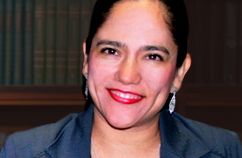
Dr. María Soledad Ramírez Montoya

Maria Soledad Ramirez Montoya holds a doctorate in Philosophy and Educational Sciences from the University of Salamanca. Her research interests include teaching strategies, technology resources for education, training of educational researchers and open education movement. She works as director of graduate and continuing education at the School of Education, Humanities and Social Sciences at Tecnológico de Monterrey (Mexico) and as a research professor in the Doctoral Education program.

She is director of the UNESCO Chair “Open Educational Movement for Latin America”, director of the International Council for Open of Distance Education (ICDE): OER Latin America office, lead researcher on the Strengthening Information Society Research Capacity Alliance (SIRCA) network, main organizer of the Regional Open Latin American Network for Social Research and Education (CLARISE) and coordinator of the Research and Innovation in Education Group (GIIE) at Tecnologico de Monterrey. She is a member of the National System of Researchers in Mexico.

Her professional experience includes teaching activities at all educational levels and massive open online courses (MOOC), head of department and pedagogical consulting. She was Secretary General of the Mexican Council for Educational Research (COMIE) and Chairperson of applications and allocation of funds from the University Corporation for Internet Development (CUDI).

Important deadlines

2016

March, 31: submission deadline for papers and project meetings. EXTENDED DEADLINE: APRIL 11th, 2016!

April, 30: communication of acceptance for papers and project meetings

May, 1: submission deadline for workshops

May, 15: communication of acceptance for workshops

May, 31: camera-ready papers and workshops. Special Issues process starts

June, 22: LINQ Conference 2016. Pre-conference meetings

June, 23, 24: UNESCO-UNIR ICT& Education Latam Congress 2016

July: dissemination of results in media, scientific dissemination of outcomes

December: Special Issues published (tbc)

Committees

Honorary committee:

Alexander Khoroshilov. UNESCO IITE (President)

José María Vazquez García-Peñuela. Rector Universidad Internacional de La Rioja (UNIR) (Co-president)

Gard Titlestad. ICDE Secretary General

Hernán Pulido. Delegado del Rector para Colombia (UNIR)

Julieta Palma. CEO UNIR México

Conference committee:

Congress & Scientific chair: Daniel Burgos, UNIR, UNIR Research, UNESCO & ICDE Chair

Programme chair: Rubén González, School of Engineering & Technology, UNIR

Workshops and posters chair: Christian Stracke, Welten Institute, Open Universiteit Nederland, The Netherlands

Local chair: Carlos Montenegro, Univ Distrital, Univ Cooperativa, UNIR

Local dissemination chair: Adriana Maritza Montejo, Univ Cooperativa

Latam relations chair: Mara Zamora, UNIR

Worldwide relations chair: Fabio Nascimbeni, UNIR

Dissemination chair: Carlos Fernández Alameda, Scientific Dissemination Unit, UNIR, UNIR Research

Website technical support: Miguel Ortega, UNIR, UNIR Research

International Advisory Board:

Soledad Ramírez, Tecnológico de Monterrey, UNESCO & ICDE Chair, México (President)

Alan Mille, Université de Lyon & TELEARC, France

Antonio Teixeira, Universidade Aberta de Portugal & EDEN, Portugal & Hungary

Celso Garrido, Universidad Autónoma de México, México

David Drabble, The Tavistock Institute, United Kingdom

Darwin Muñoz, Universidad Federico Henríquez y Carvajal (UFHEC), Dominican Republic

Edison Spina, University of Sao Paulo, Brazil

Guilherme Canela, UNESCO, Uruguay

Hyo-Jeong So, Ewha Womans University, Korea

Katherine Maillet, Télécom Ecole de Management & EATEL, France & Germany

Kirk Perris, Beijing Normal University, China

Larry Johnson, NMC (Horizon Report), USA

Lone Dirckinck-Holmfeld, Aalborg University & TELEARC, Denmark

Mansoor Al Awar, Hamdan Bin Mohammed Smart University & IITE Unesco, Dubai (U.A.E.) & Russia

Marcello Scalisi, Mediterranean Universities Union (UNIMED), Italy

Marta Mena, Universidad Tecnológica Nacional & ICDE, Argentina & Norway

Martin Weller, The Open University & ICDE Chair in Open Educational Resources, United Kingdom & Norway

Martin Wolpers, Franhoufer FIT & EATEL, Germany *In Memoriam

Maxim-Jean Louis, Contact North | Contact Nord & ICDE, Canada & Norway

Miguel Brechner, Plan Ceibal, Uruguay

Reyad Y. Hamzah, Kingdom of Bahrain, Bahrain

Rory McGreal, Athabasca University, UNESCO/ICDE/COL Chair in Open Educational Resources, Canada

Samantha Becker, NMC (Horizon Report), USA

Tapio Varis, University of Tampere & IITE Unesco, Finland & Russia

Tolly S. A. Mbwette, Open University of Tanzania & African Council of Distance Education, Tanzania

Wayne Mackintosh, OER Foundation, Otago Polytechnic, New Zealand

Submission

Submission closed

The submission, review and acceptance of articles has already completed


There are two types of contributions: 1. Scientific papers and 2. Workshops

1. Papers are accepted through EasyChair.com following these instructions:

  • .docx/.pdf file formats are accepted, folllowing this template
  • Do not include author details, university or country information in the manuscript. This is a double-blind peer review process. Author information should be supplied using the manuscript submission form online or in the cover letter for email submissions
  • Please ensure all articles are proofread and checked for accuracy prior to submission. Changes cannot be made during the review process. If accepted, minor revisions may be made prior to final submission
  • Submission process will be managed via EasyChair.com
  • Presentations can be carried out in person or via streaming
  • Online participation will provide access to selected sessions
  • Certificates will be handed out for every presentation, with and indication about the channel (face-to-face, online)

2. Workshop proposals have to address one or several of the main tracks of the Congress, and they have to be submitted via EasyChair.com. The workshop proposals have to meet the following requirements:

  • .doc(x) files with all requested workshop details about objectives, facilitators, target public, expected audience, Interactivity, technical requirements, links to any project or initiative, and other fields, to be filled in following this template.
  • Include a direct relation one or several of the main tracks of the Congress
  • Interactive workshops will be preferred: please describe all interactive elements and how to involve participants before, during and after the workshop
  • Submission process will be managed via EasyChair.com
  • Workshops can only be carried out in person at the Congress
  • Certificates will be handed out for every workshop facilitator

Review Process

The review process will be double-blind. Therefore, please anonymize your submission. This means that all submissions must contain no information identifying the author(s) or their organization(s): Do not put the author(s) names or affiliation(s) at the start of the paper, anonymize citations to and mentions of your own prior work that are directly related to your present work, and do not include funding or other acknowledgments.

Each contribution (either paper or workshop) will be reviewed by at least two PC members. The acceptance decisions will take into account paper novelty, technical depth, elegance, practical or theoretic impact, and presentation.

  • Original: the contribution explores a new idea, project or issue; discusses existing research with promise of new insight, discusses new research; or presents new ways of considering existing information
  • Engaging: presentation format will involve the audience in some way, or has high potential to attract conference attendees by addressing needs of the community
  • Significant: the contribution raises and discusses issues important to improving the effectiveness and/or sustainability of open education efforts, and its contents can be broadly disseminated and understood
  • Quality: claims are supported by sufficient data; claims draw upon relevant literature; and limitations are described honestly
  • Relevant: the contribution addresses one or more of the themes of the Congress

Post-Conference Publication and Indexing

All U2016 Latam presented scientific papers will be published in the conference proceedings by UNIR Editorial (with ISBN) and submitted for indexing. Authors of selected outstanding papers will be invited to submit extended versions of their papers for consideration of publication in the following journals, in the format of special issues:

  • The International Review of Research in Open and Distance Learning (SSCI, Scopus, etc)
  • The International Journal of Interactive Multimedia and Artificial Intelligence (ESCI, Inspec, EBSCO, Latindex, etc)
  • IEEE Latam Transactions (SCI, IEEE)
  • Revista de Ingeniería Solidaria de la Universidad Cooperativa
  • Revista de Redes de Ingeniería de la Universidad Distrital

Selected papers will get additional attention from the Scientific Dissemination Unit of UNIR (UCC+i), which will disseminate the research outcomes, along with interviews with their researchers, in general and thematic media

Formatting Guidelines

  • Contributions must be in English and not more than 20 single-column pages in length, following the template
  • Contributions must be original and relevant to one of the many conference topics
  • Authors are required to ensure accuracy of quotations, citations, diagrams, maps, and tables
  • Figures and tables need to be placed where they are to appear in the text and must be clear and easy to view
  • Papers must follow format according to the downloadable template
  • Workshops must follow format according to the downloadable template
  • Publications will be accepted in English only, with a proficiency level
  • Translations of accepted scientific papers into Spanish will be accepted as annexes to the general conference proceedings

Organization

About UNESCO Institute for Information Technologies in Education (UNESCO IITE)
logo-iite

The UNESCO Institute for Information Technologies in Education (UNESCO IITE) shall contribute to the design and implementation of the programmes of the Organization in regard to application of information and communication technologies in education. Hence, IITE serves a specific purpose within the fields of competence of UNESCO. It is principally programme-driven, responds to both global and country needs, is a part of an operational network of UNESCO structures and supports the achievement of the strategic objectives of the Medium-Term Strategy as well as the programme priorities of UNESCO, as approved by the General Conference.

IITE’s mission is to serve as a centre of excellence and provider of technical support and expertise in the area of ICT usage in education.

More information at: http://iite.unesco.org

About UNIR Research

Unir Research-small

UNIR Research – The Research and Technology Department at Universidad Internacional de La Rioja (UNIR) – designs, implements and evaluates research strategies at the university. UNIR Research encourage researchers and professors to contribute effectively to research activities at UNIR, by participating in research groups, in national and European Research Projects, as well as in a wide range of calls and initiatives related to research and to the technological aspect of the institution.

UNIR research integrates and directs research activities at UNIR in line with the main academic fields of the university (Technology, Education, Communication and Social Sciences, amongst others).

Moreover, UNIR Research promotes research agreements with national and international institutions from all over the world, (mostly from Spain, Europe and Latin America). UNIR Research also represents the university at international congresses, in international organisms and Executive Boards.

More information at: //research.unir.net

About UNESCO
UNESCO-Logo_Calidad

In 1945, United Nations Educational, Scientific and Cultural Organization (UNESCO) was created in order to respond to the firm belief of nations, forged by two world wars in less than a generation, that political and economic agreements are not enough to build a lasting peace. Peace must be established on the basis of humanity’s moral and intellectual solidarity.

UNESCO strives to build networks among nations that enable this kind of solidarity, by:

  • Mobilizing for education: so that every child, boy or girl, has access to quality education as a fundamental human right and as a prerequisite for human development.
  • Building intercultural understanding: through protection of heritage and support for cultural diversity. UNESCO created the idea of World Heritage to protect sites of outstanding universal value.
  • Pursuing scientific cooperation: such as early warning systems for tsunamis or trans-boundary water management agreements, to strengthen ties between nations and societies.
  • Protecting freedom of expression: an essential condition for democracy, development and human dignity.

More information at: http://en.unesco.org

About Universidad Internacional de La Rioja (UNIR)
logo unir

Universidad Internacional de La Rioja (UNIR, www.unir.net, Spain) is a young 100% online university founded on a global vision of education directly linked to the market and the Society. UNIR facilitates an exclusive, innovative and high quality virtual model of higher education, which leans on a personalized, pro-active, and collaborative distance learning method of instruction.

UNIR is an academic institution established in compliance with the current regulations governing universities, fulfilling all parameters and regulations of the European Higher Education Area (EHEA).

UNIR provides international courses, in English and Spanish, and comprises an academic community of over 1.000 highly knowledgeable lecturers across the World, along with a strong team of more than 500 multidisciplinary staff members (including 150 tutors), working on R&D projects and support services (i.e. tutoring, legal, publishing, editing, technical, administrative, et cetera). Student number keeps increasing exponentially: over 26.000 in 2015. UNIR has premises in Spain (Logroño and Madrid), Colombia (Bogota), Argentina (Buenos Aires), Bolivia (Santa Cruz), and Mexico DF (Mexico), along with a number of collaboration agreements with Latin American and European universities, mainly. Furthermore, UNIR works hard to remove barriers, and to eliminate distance for learners with different profiles so that they can study at anytime and anywhere.

More information at: http://www.unir.net

About Universidad Distrital “Francisco José de Caldas”
Universidad Distrital Francisco José de Caldas

Universidad Distrital “Francisco José de Caldas” is a public institution of Bogotá, Colombia, is the Public University of the Special Capital District, with more that 30.000 students distributed in 5 faculties (Engineering, Environment and natural resources, Sciences and Educations, Arts and Faculty Technology).

The Universidad Distrital Francisco José de Caldas is the second most important public higher education institution in the city, after the National University of Colombia, It was founded in 1948, by Priest Daniel de Caicedo, who would become its first rector, with the support of the Bogotá City Council, as the Municipal University of Bogotá. It changed its name to the current in 1957 when the municipality of Bogotá became a district. Its establishment was officialized by the 1970 decree No. 1030, issued by the national government. The university offers 70 programs at undergraduate and postgraduate levels, including 13 master and 3 doctorates.

Más información en: https://www.udistrital.edu.co/

About Universidad Cooperativa de Colombia
Universidad Cooperativa de Colombia

The history of Universidad Cooperativa de Colombia started in 1958 when a group of coperativists led by the brothers Henry and Rymel Serrano Uribe and Mr. Carlos Uribe Garzón decided to work on the development of solidarity economy, particularly on the cooperative movement, based on the instruction of adults on this doctrine. This is why; it was created the Moses Michael Coady Institute on behalf of the cooperative priest who was one of the pioneers of cooperative education in his country.

The Universidad Cooperativa de Colombia continues to move forward to excellence and the institutional accreditation, strengthening its relations in the country and worldwide, providing the physical and technological infrastructure, innovating in the teaching and learning processes, in order to fulfill the instructional needs from people in the different parts of the country where the University has its presence. We are committed with the idea of building a better country for all; we are “One university for a whole country”.

Más información en: http://www.ucc.edu.co/Paginas/inicio.aspx

Scientific Rationale

One of the main challenges in modern education is to blend formal, official learning, with a huge variety of content provision, group discussion, self-entrepreneurship, user’s own portfolio, and long list of possibilities off-the-classroom. Informal learning happens anytime, anywhere. We strongly believe that formal learning, too. The cornerstone is to find the right balance between both contexts.

The effective integration of Open Educational Resources with formal lessons, or between traditional lectures with live multi-user conferences, or even more between spontaneous forum contributions outside the Learning Management System, and the official activities towards certification, this effective integration will make the difference, the actual change of educational paradigm.

And it would work for every single shareholder of the educational community, from teachers to tutors, from support staff to managers, from content providers to learning designers and, of course, from students to graduates.

This conference will explore, analyse, discuss and, above all, suggest specific actions to take, in order to achieve a full integration of resources, learning styles, educational methodologies, administrative goals, institutional visions, and every single concern of every member of the Higher Education community.

Spanish & English will be the official languages. Bi-directional, live interpretation will be provided.


ICDE International Council for Open and Distance Education (ICDE)

The International Council for Open and Distance Education (ICDE) is the leading global membership organization for open, distance, flexible and online education, including e-learning, and draws its membership from institutions, educational authorities, commercial actors, and individuals.

ICDE has consultative partner status with UNESCO and shares UNESCO’s key value – the universal right to education for all. ICDE further derives its position from the unique knowledge and experience of its members throughout the world in the development and use of new methodologies and emerging technologies.

ICDE was founded in 1938 in Canada as the International Council for Correspondence Education and today has members from over 60 countries worldwide.

ICDE’s Permanent Secretariat is in Oslo, Norway, and has been hosted by this country on a permanent basis since 1988. ICDE is supported by the Norwegian Ministry of Education and Research and by membership fees.

More information at: http://www.icde.org